The Future Arrives with Medium Starch
Sometimes modernization arrives with a touchscreen. Sometimes it brings candy.
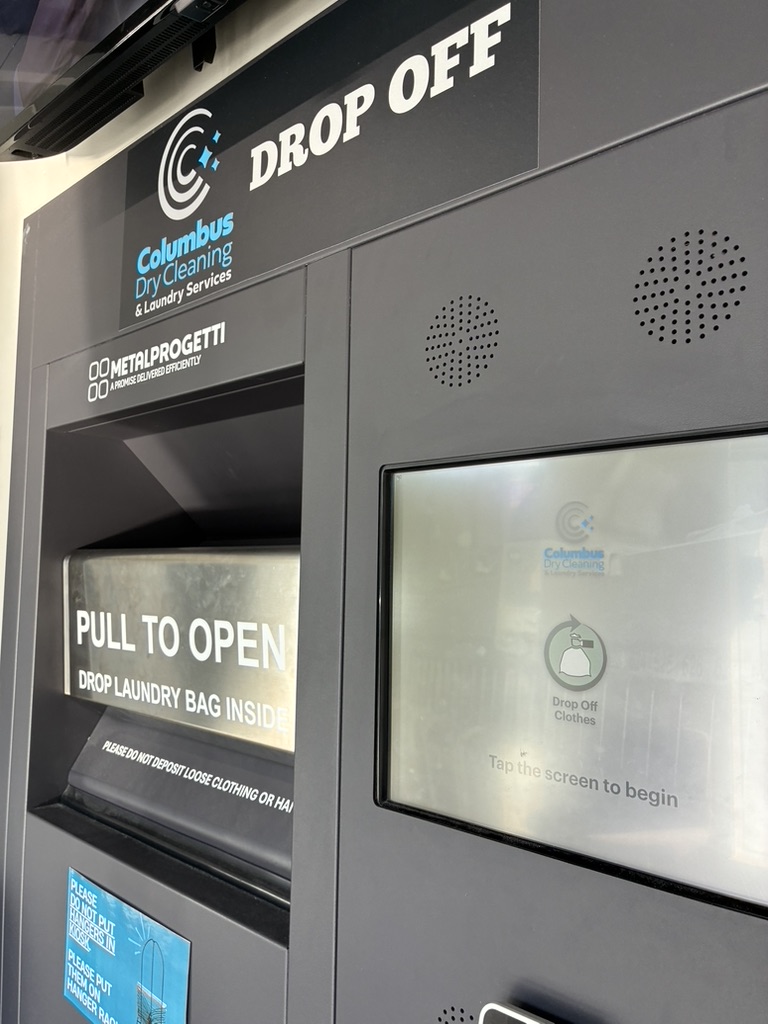
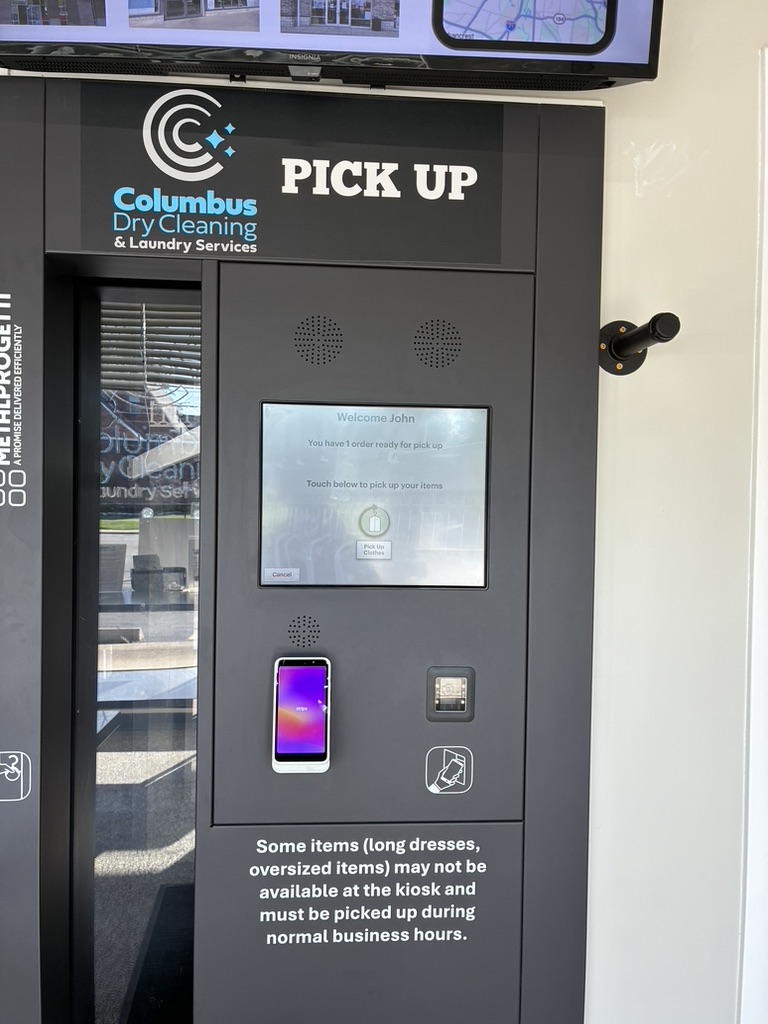
The Metalprogetti drop-off and pickup system at Columbus Dry Cleaning's Clintonville shop. Photographs by John Horan.
I went to the dry cleaner one morning with an armful of shirts and found the future standing in the lobby.
It was a large black kiosk with a touchscreen, a scanner and a metal door marked PULL TO OPEN.
I had expected a counter and someone standing behind it. Instead, my neighborhood dry cleaner had acquired an ATM for clothing.
I was intrigued and mystified.
“Just what I need this morning,” I thought. “Another system to decipher. Another touchscreen to master.”
And I wasn’t alone.
Another customer had walked in just before me. I watched carefully as he worked through the commands, the way people study the traveler ahead of them at an unfamiliar airport kiosk.
Tap START. Enter your phone number. Verify your information. Enter the number of items. Choose two-day or next-day service. Place the clothing in the laundry bag. Pull open the metal door. Put the bag inside. Tap DONE.
I dutifully followed the prompts and began creating an account. How difficult could it be to communicate “two shirts, medium starch” to the future?
The Human Behind the Machine
As I worked my way through the menu, a man emerged from the back of the shop carrying a small blue bag with handles, the kind you might receive at a boutique.
He greeted me warmly.
“Here’s our new-customer welcome bag,” he said.
To say I was impressed would be too mild. I had not expected any human interaction. Nobody had ever greeted me at an ATM. A gym locker never offered me candy.
Yet here was a real person speaking to me.
His name was James. He had worked for Bart’s Cleaners and Columbus Dry Cleaning for four years, following other jobs in the dry-cleaning business. He was working at the Clintonville shop, part of Columbus Dry Cleaning & Laundry Services.
James described the contents of the bag: my own reusable laundry drop-off bag, a card offering one-third off my next order, a brochure explaining the company’s services—and a small box of candy.
Good salesmanship, I thought.
The machine had barely finished registering me as a customer before the human being made me feel like one.
When I finished the drop-off, a confirmation appeared on my phone. No paper receipt.
“How long have you had this system?” I asked.
James said it had been installed recently. He remembered the owner arriving one day with a workman and a measuring tape.
James figured something was up.
They began measuring the lobby to determine where the new drop-off and pickup system would fit. Then the owner gathered the employees and addressed the question that accompanies almost every arrival of new technology.
“Nobody’s gonna lose their job,” he told them.
No one did. The company adjusted responsibilities and found roles for everyone.
The Italian-made Metalprogetti system was installed in August 2025. Customers can drop off and retrieve clothing around the clock. The only pickup exceptions are oversized items that cannot safely fit on the conveyor or in the lockers, including boxed wedding dresses and extra-long dresses.
The cleaning itself takes place at the company’s production facility near German Village in downtown Columbus.
A simple storefront had become the visible edge of a larger system: touchscreen, customer account, laundry bag, transportation, processing facility and return trip.
The counter had not exactly disappeared. It had been stretched across time and distance.
Learning the New Routine
James liked the new arrangement, though he said some older customers hadn’t taken to it.
I could understand the hesitation. I had watched the customer ahead of me to learn how the thing worked. Even an ordinary errand now required a little instruction.
The attraction was easy to understand, too. People could drop off clothing before work, after dinner or in the middle of the night if the condition of their shirts had become truly alarming.
The kiosk did not eliminate personal service. During staffed hours, customers can walk past the screen and work directly with James or another associate.
That matters, because there is something reassuring about a familiar counter. Someone brings the clothing; another receives it. Questions can be asked. Special instructions can be explained. You remember who wants medium starch and who has a wedding coming up. Confusion gets resolved with a sentence and a smile.
The kiosk assumes that the transaction is predictable and that the customer can understand its language. It does not become impatient. It also does not pick up signals that you’re stressed.
Matt Simon, the company’s owner, said the decision to install the kiosks was not taken lightly. People have an “intimate relationship” with their nicer clothing, he said, and often want to discuss their individual needs with another person.
Speaking of technology, Simon said, “We realized we needed to use it in a way to enhance their experience, not take away from it.”
That morning, the choice wasn’t just between a person and a machine. The business had automated the transaction without abandoning hospitality.
The future shows up not as one dramatic invention, but as thousands of specialized systems appearing in ordinary places. It is arriving at the pharmacy counter, the hotel desk, the grocery checkout and the restaurant register. Then one morning it is waiting for your shirts.
The screen asked for my phone number. James asked how I was doing.
The machine gave me instructions. James gave me candy.
The kiosk registered my account. James made me feel welcome.
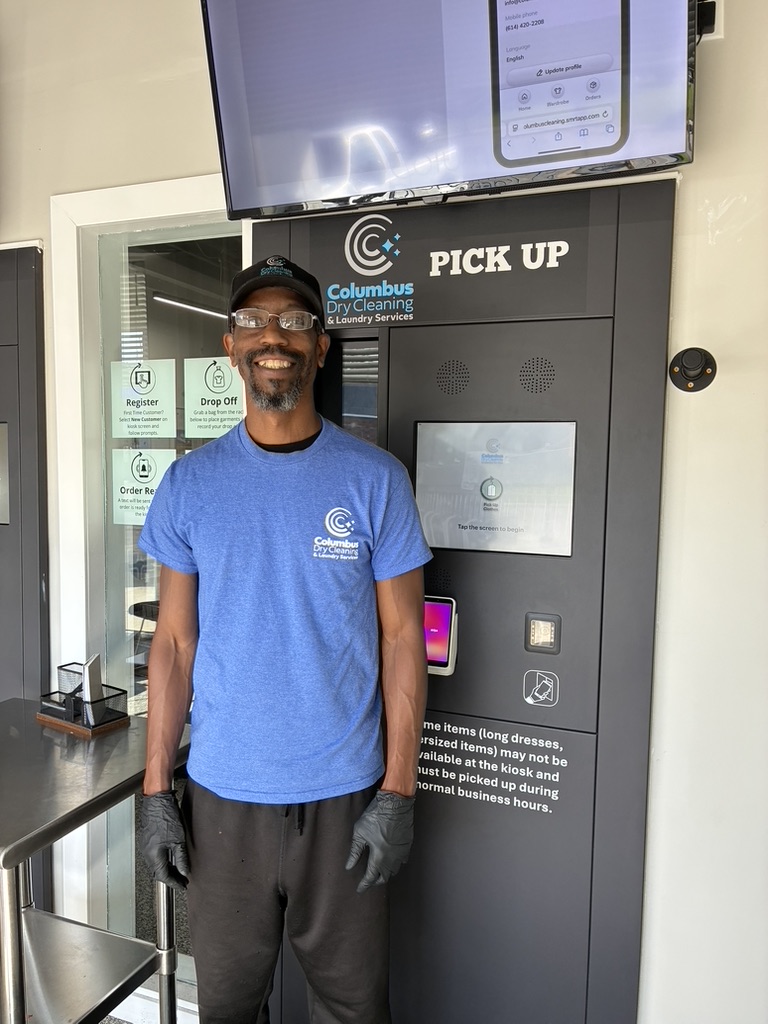
When I went back to pick up my shirts, the screen read Welcome John.
Now the machine was greeting me by name, too.
Later, over a cup of coffee, I looked down the street and saw a man walking his dog.
A collar, a leash and an agreement between two species that each would pretend the other was leading.
Plenty of machines do our chores. But not every activity is a burden, and efficiency isn’t the purpose of every journey.
What if someone designed a robot to take my dog Tiger for a walk?
A dog walk is an errand only to someone who hasn’t had the pleasure of an unplanned adventure with a dog.
Perhaps a robot could manage the leash.
But Tiger would know the difference.