How I Got Into Radio
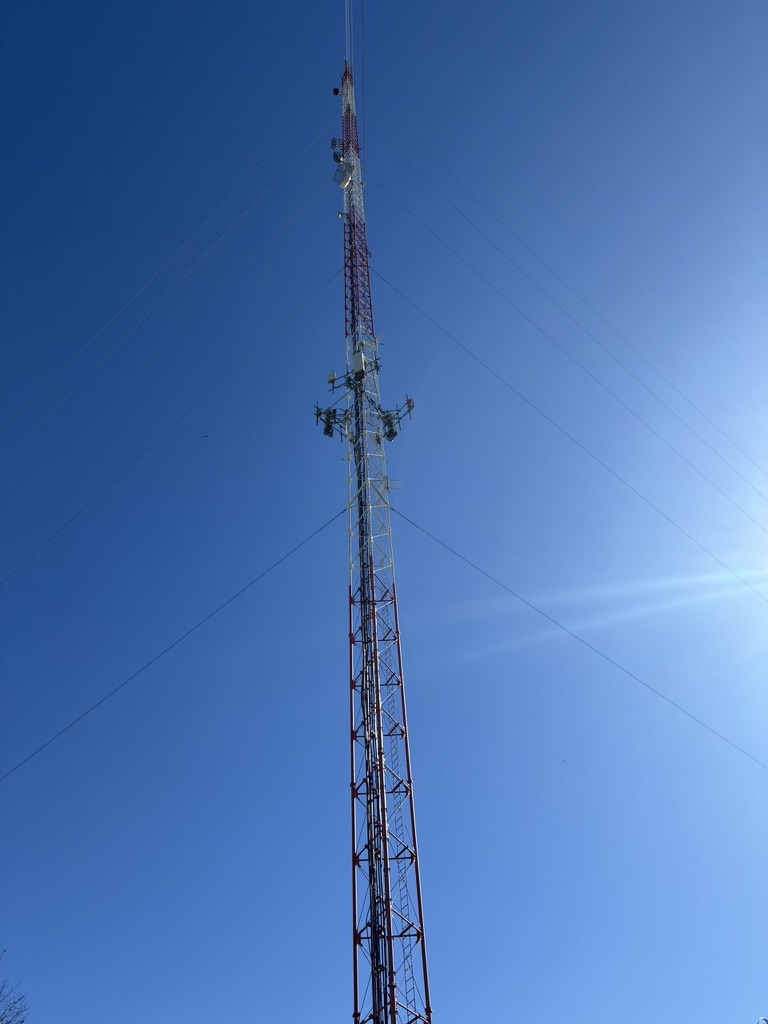
Tower of Tomorrow. Photograph by John Horan.
It's the dilemma faced by everyone starting out in an industry: How do you get a job if you have no experience? And if you have no experience, how do you get that first job?
I was waiting tables at a restaurant in the same building as the biggest radio station in town. The station executives came in regularly and remarked that I had a good voice --- I should go into radio!
When I asked them for a job, they asked if I had any experience.
None.
Undeterred, I asked how I could get on-air experience. The station manager told me I should create a demo tape and send it around to all the local stations, even the ones out in the countryside. They were always hiring, he said, and that was the best place to get that first break.
Sounded easy, I thought.
But I didn't have access to a recording studio or equipment. When I looked into renting studio time, it would cost about $300 per hour and take more than three hours --- roughly what I was making in a month.
So that didn't look achievable.
I was commiserating with my best friend, Mark, about the high cost of studio rental and the fact that I didn't know what to do. A thousand dollars was about what I made in a month, and I simply didn't have it.
Mark had worked at a shop selling stereo equipment years before. He pointed out that Bruce Springsteen had recorded Nebraska at home on a four-track recorder. Why couldn't the two of us do something similar?
We'd just need to rent a mixing board and microphone and plug the output into his home stereo setup. He already had a reel-to-reel tape recorder and cassette deck in his carpeted basement --- ready-made for basement tapes.
Mark would engineer. I'd provide the voice and material.
I went to the local music store and discovered that I could rent a four-track mixing board and microphone for $184 for one day.
I had my budget.
And I had my deadline.
Time to get working.
I wrote a script for my radio demo covering the things I thought a station would want to hear: announcing, news and creative commercial production. I even made my own commercial for the new Amiga personal computer from Commodore, a cutting-edge machine just coming onto the market.
One Thursday evening after work, we entered the basement and began crafting our masterpiece.
We recorded late into the night. We had to finish in one day or it would cost me another $184 in rental fees.
Mark engineered and edited the recording, adding music and effects, until we had 15 minutes of real synthetic radio.
He dubbed the demo onto cassettes while I returned the rental equipment.
Then came distribution.
I went to the library and looked up the address of every radio station in the area and began my campaign.
Type letter.
Include cassette with printed label.
Place neatly in manila envelope.
Take package to post office.
Mail.
Then do it again.
And again.
The old-school, manual way.
Three months later, I had my first full-time job on the air.
But that was just the beginning.
In 1985, the idea of a personal computer in every home still seemed futuristic. Today, a computer is nearly as commonplace as a toaster. It gives an individual access to capabilities that once required entire rooms, departments or companies.
Desktop publishing. Digital audio. Smartphones. AI.
Looking back, Mark and I didn't need to recreate a professional recording studio in his basement. We needed only the parts of the studio necessary to do the job --- a microphone, a mixing board, recording equipment --- and the human imagination to put them together.
The tools have changed enormously since that Thursday night. What people can do with them hasn't.
Give people access to the tools, and you'll be surprised by what they can build.